About The Book
Books by Karen Sullivan
The Gluten-Free
Goddess' Cookbook' grew
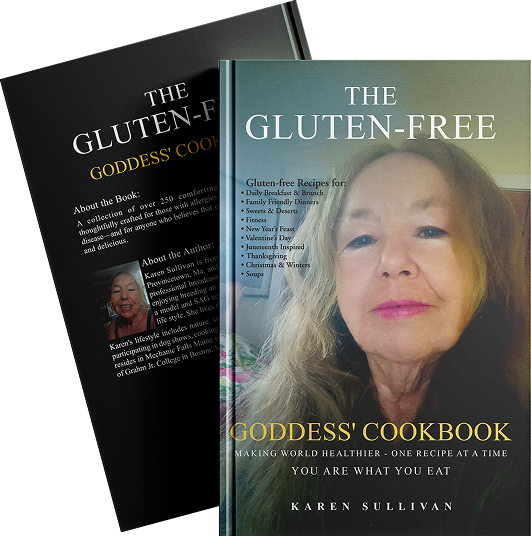
‘The Gluten-Free Goddess’ Cookbook’ grew from Karen Sullivan’s personal health journey and her determination to make gluten-free living both practical and enjoyable. She grew up with a celiac grandmother, so dietary restrictions were familiar territory. But experiencing her own health crisis taught her what gluten was actually doing to her body. Arthritis made movement painful. Digestive issues became constant. Then Lyme disease complicated everything further. When she finally eliminated gluten, her health improved in ways medications had not achieved.
That transformation led to this cookbook. Karen gathered over 250 recipes designed for real life: weekday breakfasts that get you out the door, family dinners that satisfy everyone, snacks that hold you over, and desserts that feel indulgent without compromise. The recipes cover daily meals and special occasions, from fitness-focused dishes to full holiday spreads for Thanksgiving, Christmas, New Year’s, Valentine’s Day, and Juneteenth celebrations. She organized the book to help readers find what they need quickly, whether that’s a simple soup or an entire holiday menu.
Beyond recipes, Karen addresses the practical challenges of gluten-free cooking. She explains how to stock your pantry with reliable ingredients, which substitutions work in different types of recipes, and how to prevent cross-contamination when cooking for mixed households. Her approach assumes you want to eat well without spending all day in the kitchen or hunting for obscure ingredients. These are recipes that work with regular grocery store items and fit into busy schedules, proving that gluten-free meals can be straightforward and genuinely satisfying.
Why Read It
If you are managing celiac disease, gluten sensitivity, or chronic health issues that might connect to diet, this cookbook gives you recipes you can actually use. Karen writes from experience, not theory. She lived through the frustration of limited options and feeling terrible, then figured out how to eat in ways that restored her health. Her recipes reflect that practical knowledge.
The book addresses real situations. You need weekday breakfast ideas that do not require an hour of prep. You want family dinners that do not prompt complaints or require cooking separate meals. You need desserts for celebrations that taste good enough that nobody asks why they are gluten-free. Karen provides all of this, organized by meal type and occasion, so you can find what you need without flipping through the entire book.
The practical sections matter as much as the recipes. Knowing which flours substitute well in which applications saves money and prevents waste. Understanding cross-contamination helps if you are cooking for people with severe sensitivities or celiac disease. Learning how to stock your pantry means you can make most recipes without special shopping trips. These details make the difference between gluten-free cooking feeling like a burden versus becoming your normal routine.
This cookbook also works if you are simply trying to eat cleaner and feel better without a formal diagnosis. Karen’s philosophy centers on the idea that food should support health, and her recipes prove that eating well does not require sacrifice or complexity.